Many businesses invest in Odoo ERP expecting immediate results, only to discover that the software is only part of the equation. The way Odoo is configured, adopted, and aligned with your business has a direct impact on the value you get from it. A strong Odoo implementation turns a powerful platform into a system teams can actually rely on.
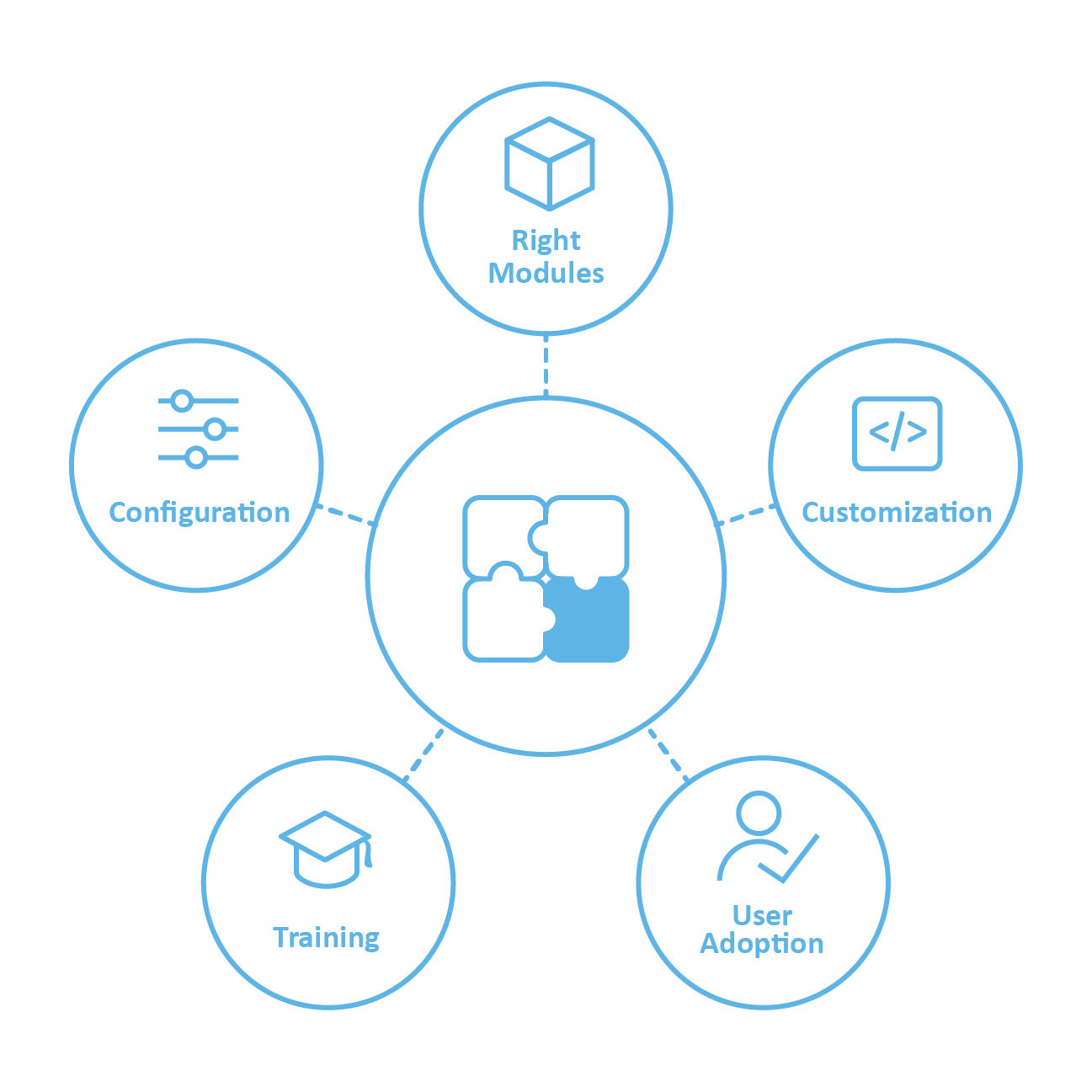
The best setup isn't the one with the most features; it's the one with the right Odoo apps for your business.
Odoo should support the way your business works, not force your teams into unnecessary workarounds.
Even the best ERP system falls short if people don't use it. Clear training and guidance help teams get value from day one.
As your business evolves, reliable Odoo support helps keep your system aligned with changing requirements.
Unclear Requirements
Unnecessary Complexity
Process Misalignment
Harder Maintenance
Low User Adoption
Long-Term Issues
Hours of Support
Clients Served
Projects
Employees
Odoo implementation is the process of preparing Odoo ERP around a company's actual requirements. It can include business analysis, module selection, configuration, data migration, integrations, customization, testing, employee training, and go-live planning.
There is no single timeline for every implementation. The duration depends on factors such as business complexity, number of applications, integrations, data migration, custom development, users, and the scope of the ERP project.
Common risks include unclear requirements, selecting the wrong modules, unnecessary customization, poor data preparation, weak testing, insufficient training, and low user adoption. A strong implementation process addresses these issues before they become expensive problems.
Yes. Some Odoo reviews praise the platform's flexibility and connected applications while also noting that complex configuration, customization, or implementation can create challenges when the project is not managed carefully.
For many businesses, ongoing Odoo support remains important after launch for troubleshooting, user guidance, optimization, updates, integrations, improvements, and changes to the ERP environment as the organization grows.