Growth is good for business, but it also exposes the limits of manual processes. As orders increase, teams expand, and more data starts flowing through the business, spreadsheets become harder to manage. Information gets scattered, reporting takes longer, and simple tasks begin consuming more time than they should.
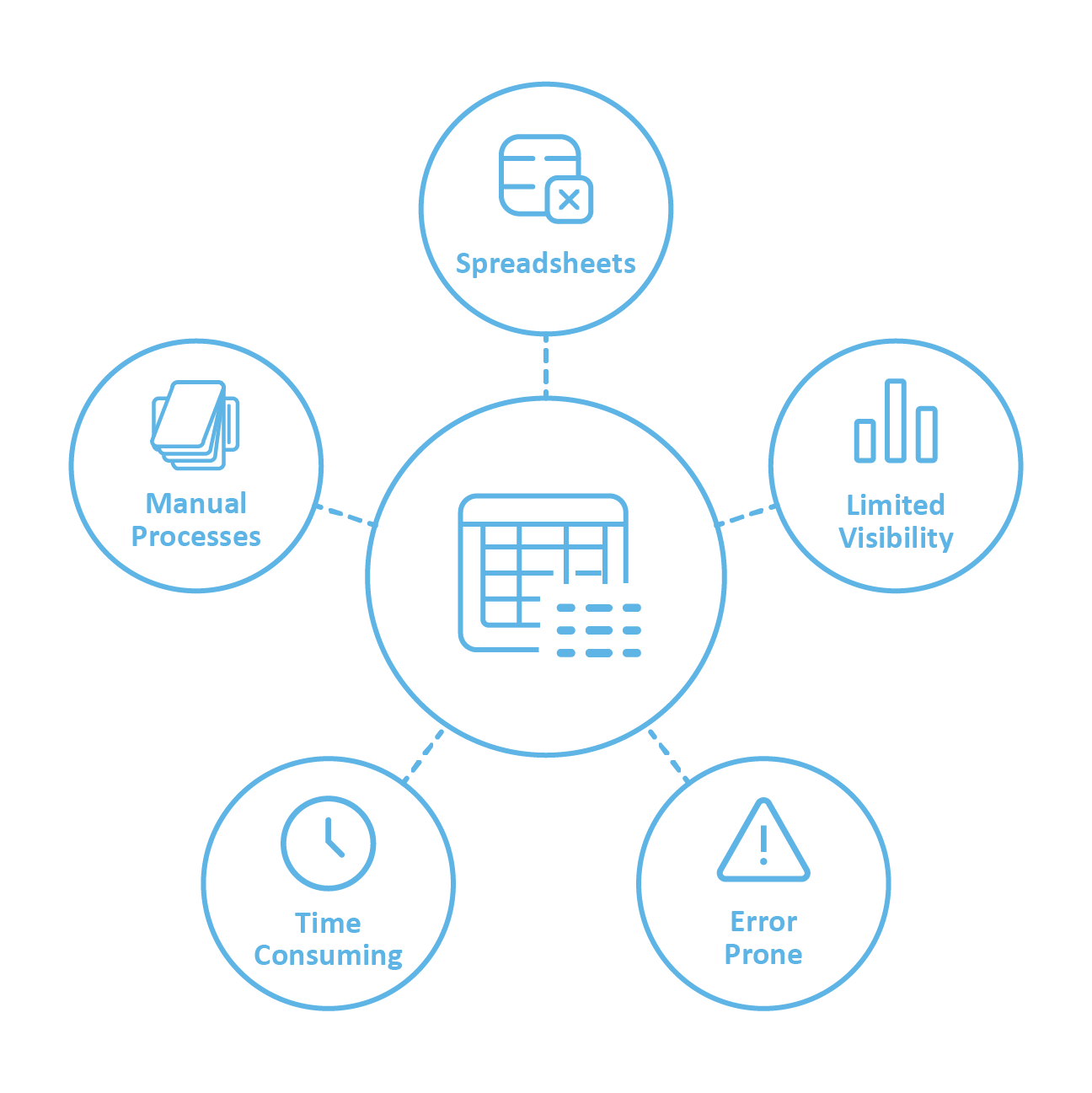
As information grows, so does the time spent updating records, checking figures, and moving data between files. What once took minutes can start taking hours.
Different departments maintain different records, making it difficult to know which numbers are accurate and which version is up to date.
When reports rely on manual updates, important information often arrives too late. Opportunities are missed while teams wait for answers.
Processes that worked for a smaller business become harder to manage as customers, transactions, teams, and locations continue to grow.
Hours of Support
Clients Served
Projects
Employees
Odoo is an integrated business management platform that connects functions such as CRM, sales, inventory, accounting, HR, and operations. Growing businesses often consider Odoo ERP when spreadsheets and manual processes become difficult to manage at scale.
A business should start considering Odoo ERP when teams are managing multiple versions of spreadsheets, entering the same data repeatedly, struggling with reporting, or relying on manual checks to keep information accurate.
Spreadsheets remain useful for simple tracking and analysis, but ERP Odoo provides connected workflows, shared data, permissions, automation, and real-time visibility that become increasingly important as operations grow.
Odoo does not necessarily eliminate Excel entirely. Instead, Odoo ERP can replace spreadsheets as the main operational system for sales, inventory, accounting, CRM, purchasing, and other connected processes.
Yes. Odoo's modular structure allows businesses to start with the applications they need and expand their ERP environment as teams, transactions, departments, and operational complexity grow.