
How Media & Entertainment Software Is Engaging the Modern Audience
Why Viewers Leave Even When the Content Is Good
A user starts watching a series on a smartphone during lunch, continues the viewing experience on a home television later that day, then eventually shares a favourite scene with a friend at night. A separate watcher passes over dozens of videos, refusing to view any of them. Both are part of the same audience, but their expectations and habits are completely different.
Content marketing is no longer enough for media and entertainment companies to reach consumers. You must entice them to come back and interact.
That is where media software development makes a difference. It assists in creating digital experiences with realistic user engagement around discovery, viewing, reading, and interaction with entertainment content. The right technology can transform disjointed engagements into more meaningful connections with viewers, from streaming platforms to audience analytics.
The Experience Matters as Much as the Content
While great content will remain a key driver, the experience is what makes the difference in whether a viewer will spend five minutes or come back for another season.
Consider when a streaming service loads too slowly, a live broadcast continues to buffer, or a user doesn't know how to watch the next episode. Regardless of content quality, dissatisfied users will seek alternative services.
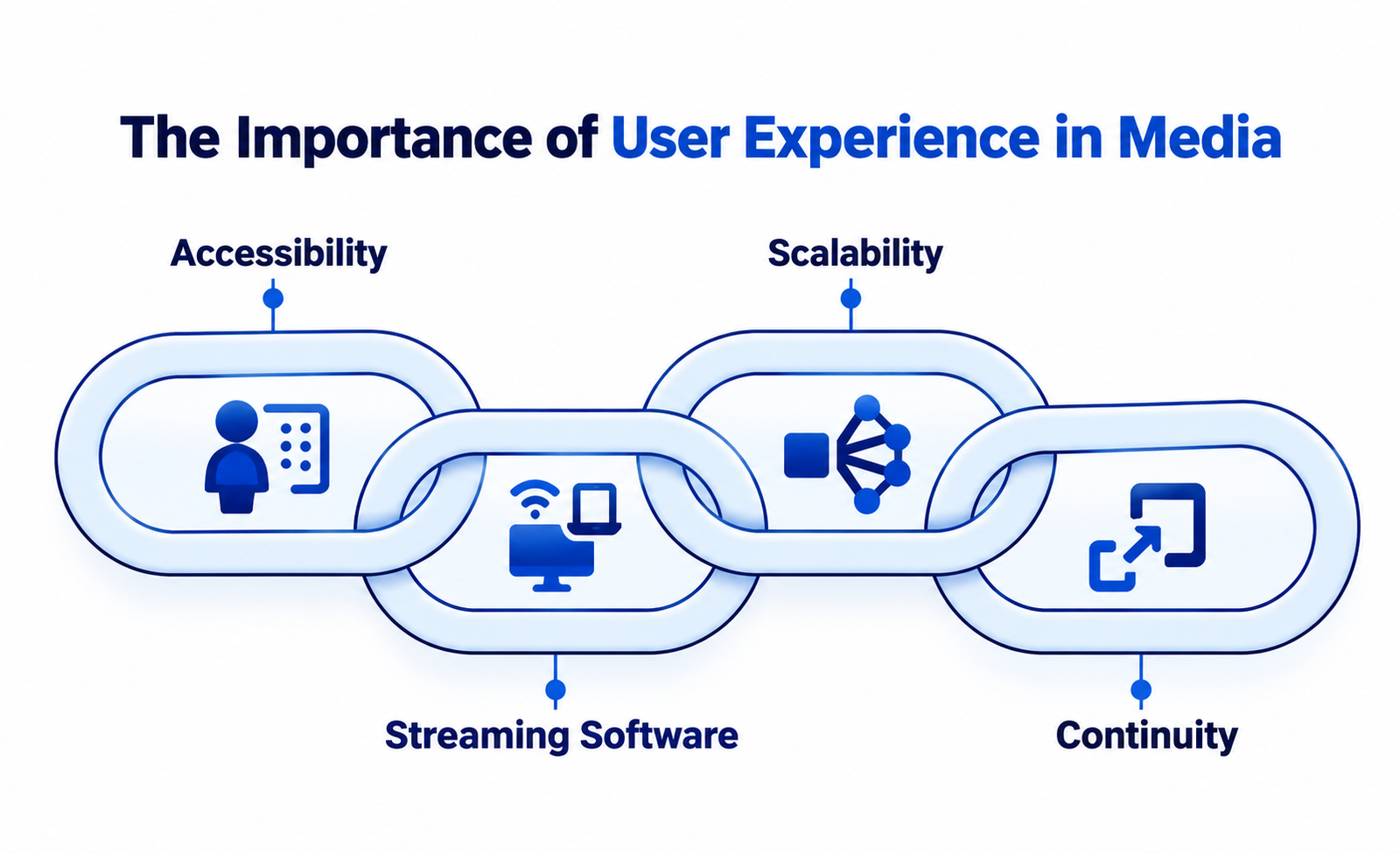
That's why media companies invest in their systems so people can access content easily. For instance, video streaming software enables streaming of video across devices and can include adaptive playback, user profiles, watchlists, and recommendations.
The challenge is not just to put a video on the internet. It is providing a great user experience when thousands of people could be watching at the same time, perhaps a big sports final, a live concert, or an eagerly awaited release.
An effective platform also takes into account what occurs once the user changes device, loses their signal, or comes back after days. All the little things add up.
Personalization Should Be Useful And Not Intrusive
Today's viewers want recommendations of things they like. They want relevant suggestions, not a bunch of random content.
Media platforms can use viewing history, search history, saved preferences, engagement level, etc., to suggest relevant movies, series, articles, music, etc., to users. A sports fan could well watch snippets of his favourite team, or people who enjoy documentaries may see a new release in that genre.
Personalization isn't just about collecting user information, though. Recommendations should be relevant, easily manageable, and not infringing on privacy. If a platform is suggesting the same content over and over, it'll come across as limited, not smart.
By strategically designing media software, businesses can develop a recommended features system to enhance the discoverability of their content while avoiding overwhelming users. They can also provide useful options for preferences and notifications to the users.
It's simple: you want to make people find something to dedicate their time to. If users find something they like, they will have better motivation to come back to you.
Streaming Is Only One Part of the Digital Experience
Media platforms are not just about on-demand entertainment; video platforms get a lot of attention. There are different technology challenges across every type of broadcaster, digital publisher, production studio, podcast network and event organiser.
A broadcaster might be required to provide live content on TV, mobile apps and websites. A publisher could have thousands of articles, images and videos across multiple digital channels. An enterprise may be required to transfer large-sized files to their clients and creative squad in a protected manner.
All of these requirements require variations on the solutions.
There are tools that can be used for managing content distribution, scheduling, and delivery workflows during broadcasting. In the meantime, content management software enables teams to structure digital resources, publish content, preserve versions, and handle updates more coordinated and streamlined.
Combined, these systems help teams avoid the hassles of working through logistical issues and save more time creating the content that people want to see.
It is not just about convenience; it truly is a benefit. This can also favorably impact businesses' ability to publish content on time, consistently, and to respond rapidly to shifting audience interests.
Your Content Library Can Become a Business Asset
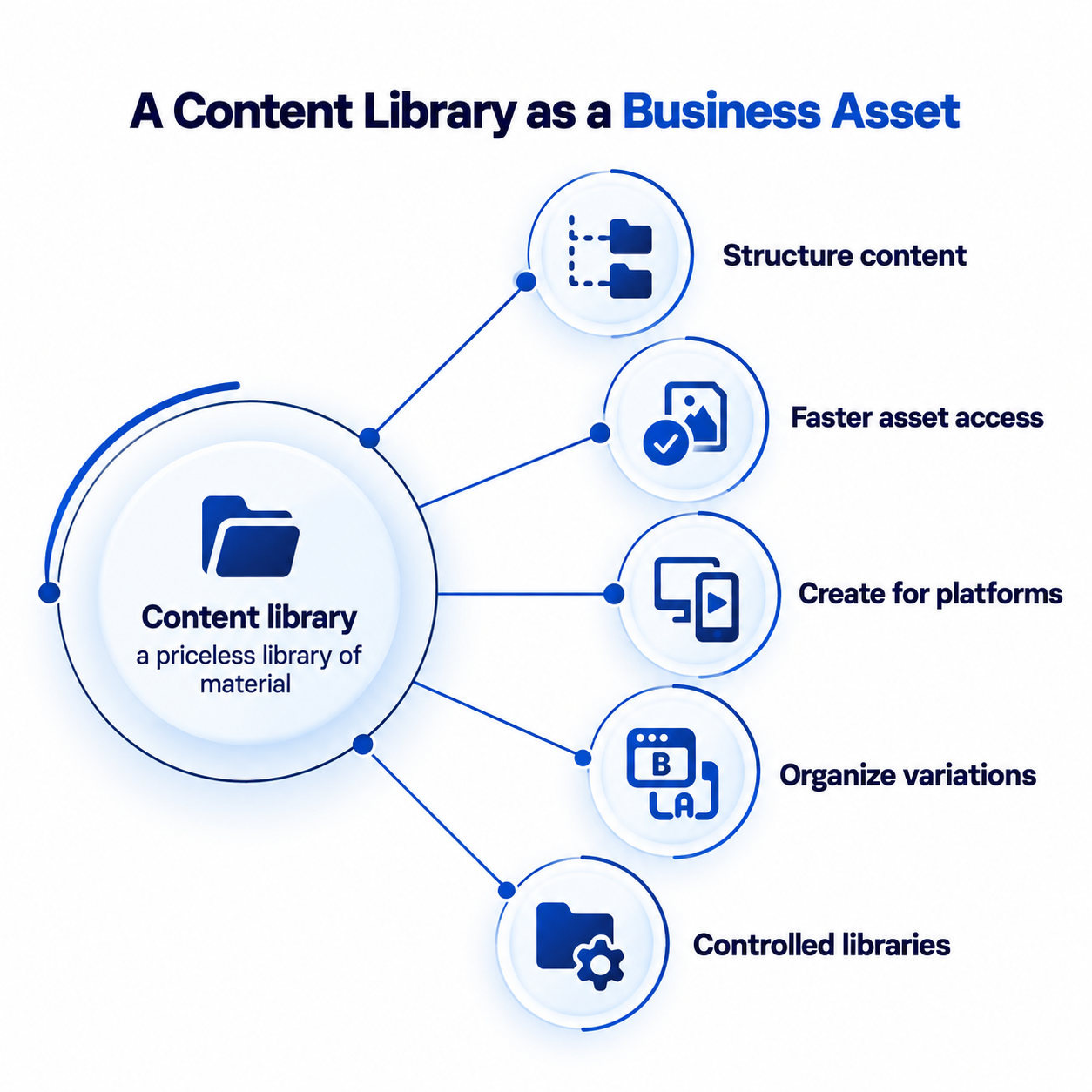
Lots of media companies have already amassed a priceless library of material. The difficulty lies in sourcing the right material, ensuring it is ready for specific platforms, and ensuring access to it at appropriate times.
If you don't have a reliable system, teams can spend hours looking through shared folders, checking file versions, adding descriptions to files, or re-creating assets already available.
A centralized content solution can structure content in various ways, such as by category, by tag, by metadata, by permissions, and by schedule. Your teams can access approved assets faster and create them for the web, apps, socials, or streams.
This is particularly beneficial for companies with many regions or stores a lot of content. Depending on various markets, one single campaign could feature various formats, subtitles, descriptions, and release times.
Those variations can be more easily organized with the right content management software and teams can keep their libraries controlled.
But there's also a long-term benefit: It makes older content ever easier to resave. A publisher might be able to use old interviews for new purposes, and a broadcaster might create a new documentary or show of highlight packages using old footage. Content, which previously was hard to find, can still be valuable.
Audience Data is More Useful if it is Used to Take Steps
Likes and followers can be a lot of numbers but don't always indicate that a media company is developing a loyal base of fans and followers.
A video could get thousands of clicks, and most viewers watching the video would bounce after a few seconds. The newsletters may have many people subscribed, but few accessing the articles. These numbers, if not interpreted in context, can fool the team and convince them of the wrong thing.
Media analytics software enables businesses to scrutinize the trends in watch time, completion rate, return visits to content, discovery, subscription activity, and drop-off. What is helpful is the knowledge of the meaning of these patterns.
In the case of viewers stopping a video at the same point, for instance, the group can pause to assess the content, speed, or playback performance. Editors who see repeat visitors to a specific type can conduct research to find out what makes that type of material interesting and schedule future programming of that type.
Let controls “inform, don't interfere”. The behavior of the audience can clue us in on what people do, but not always why. Audiences will have feedback and editorial professionals will have expert input, and they will all be presented with performance data.
Consent, data protection, and access controls are other areas of interest for businesses. It's not just more information that is better; it's more relevant and responsible information that is better!
Marketing Must Connect With the Content Experience
Different from finding content and enjoying content. You can draw a new viewer in but if you make them sign up for your campaign in a confusing way or their first interaction isn't rewarding, you may lose that new viewer.
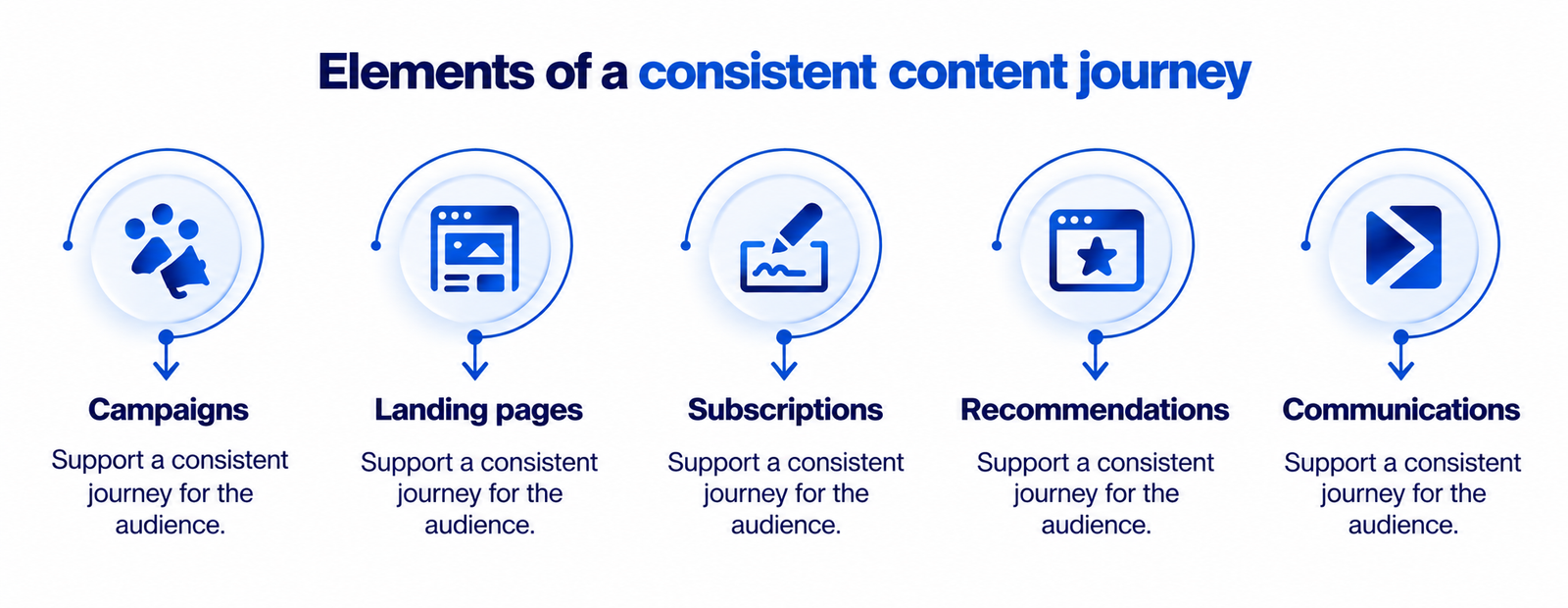
Thus, digital marketing reaches its peak performance when integrated with the other elements of the platform. A consistent journey should be supported by campaigns, landing pages, subscriptions, recommendations, and communications to the audience.
Think about a streaming company that's going to be rolling out a new series. The platform allows interested viewers to watch a trailer, check out the cast, and begin viewing, while marketing links viewers to a dedicated page. Relevant releases can then be introduced to follow-up communications, if the users have agreed to it.
Technologies can assist teams to track down engaged watchers instead of merely traffic. It can also be used to test and segment campaigns as well as provide better, more consistent reporting.
It is NOT about sending more messages or running more campaigns! The art is to match up the right content with the right audience and make that following step simple.
Building a Platform That Can Grow With Its Audience
Exports are successful if they work well for a relatively small audience, but can fail if they gain in popularity. More users create more needs: increased traffic, bigger content libraries, more complex permissions, higher infrastructure costs, security, and more.
It's time to start thinking beyond the first launch, which is where businesses need to come in.
There are specific businesses that can fulfill their needs on existing platforms and by offering subscription-based instruments. For other cases, a custom integration or building a custom app is required, due to more special workflows, content rights, audience experience or business model.
Media SaaS can provide access to capabilities without businesses needing to build them all, by doing so with subscription services. Prior to signing on to a subscription, however, there are a number of factors to consider such as subscription cost, integration constraints, data portability, and dependency on the vendor.
There may be situations where custom development is required to meet the vital needs of the product that are not covered by current offerings. To solve this problem, it would be a good idea to first recognize the business problem and evaluate the possibility of using the available tools before constructing.
Maintenance, performance monitoring, security, and accessibility are other areas that need to be addressed from the outset. They are not a feature that is added on as a supplement to the audience.
Turn Audience Expectations Into a Better Digital Product
It's not all media companies need to use as many new technologies as possible to stay competitive. They also have to see where there are friction points in their audience and what can have the greatest impact in improving those areas.
Octoon Tech is about assisting businesses in creating software solutions and interlinking digital systems according to their operational necessities. In Media and Entertainment, that might be to enhance a content workflow, go to a different platform, or create a customized digital experience.
Before investing in a new system, define one obvious thing: Content is hard to discover. Do publishing workflows impede the team? Why do viewers leave? Do you not understand why viewers are leaving? You can more easily decide how technology will be of benefit with a clearly defined starting point.
If your current tools are not allowing you to deliver the experience you desire, consider Octoon Tech's software development services to see if that could be an approach that works for your business.
The Audience Will Decide What Works
Technology can work to make distribution more personalized, more effective, and more efficient; however, it cannot make the experience interesting to users. Best media products are those that deliver worthwhile content and that are reliable in technology and understanding their audience.
That is what the actual chance is in media software development: not only placing entertainment online, but providing the possibility for people to find, enjoy, and opt to return to.
Your audience is watching, clicking, and scrolling. But do you know what keeps them coming back? Octoon Tech can help you make sense of your software needs, whether it’s improving content delivery, fixing workflow gaps, or building a platform that fits your business. Book a consultation with Octoon Tech to discuss what your media business needs next.
Frequently Asked Questions
1. What is media software development?
Media software development involves building digital solutions for streaming, broadcasting, content management, and audience analytics. It helps media businesses distribute content, manage workflows, and improve the audience experience.
2. How does media software improve audience engagement?
Media software improves engagement through personalized recommendations, reliable streaming, and easy content discovery across devices. Audience analytics also helps businesses understand viewing patterns and create content that encourages viewers to return.
3. What types of media and entertainment businesses need custom software?
Streaming platforms, broadcasters, digital publishers, production studios, podcast networks, and event organizers may need custom software to manage content, improve distribution, and support specialized workflows. Octoon Tech can help businesses assess software solutions that fit their needs.
4. How does content management software help media teams?
Content management software organizes digital assets using categories, tags, metadata, permissions, and publishing schedules. It helps teams find content faster, coordinate updates, reuse existing assets, and maintain consistency across multiple channels.