How Education Software Development Is Redefining Modern Learning
Learning has transformed significantly over the past decade, largely driven by education software development. Technology is no longer just supporting education; it is reshaping how learning is delivered at every level. From virtual classrooms and AI-powered assessments to paperless school management systems, digital tools are redefining traditional teaching methods.
Today’s learners expect more than textbooks and one-way lectures. They want interactive lessons, mobile access, instant feedback, and personalized learning paths. At the same time, educational institutions face growing pressure to improve student engagement, streamline operations, and meet increasing digital demands.
This is where modern education software plays a crucial role. Beyond basic e-learning, today’s EdTech ecosystem includes intelligent learning management systems, analytics dashboards, collaboration tools, and cloud-based school management solutions. Together, these innovations are making education more efficient, accessible, and engaging than ever before.
The Shift from Traditional Learning to Digital Learning
The education system was standardized. All the students learned at the same rate, using the same teaching method and the same learning content. This was good for decades, but it was inflexible and impersonal.
Digital learning turned that approach upside down.
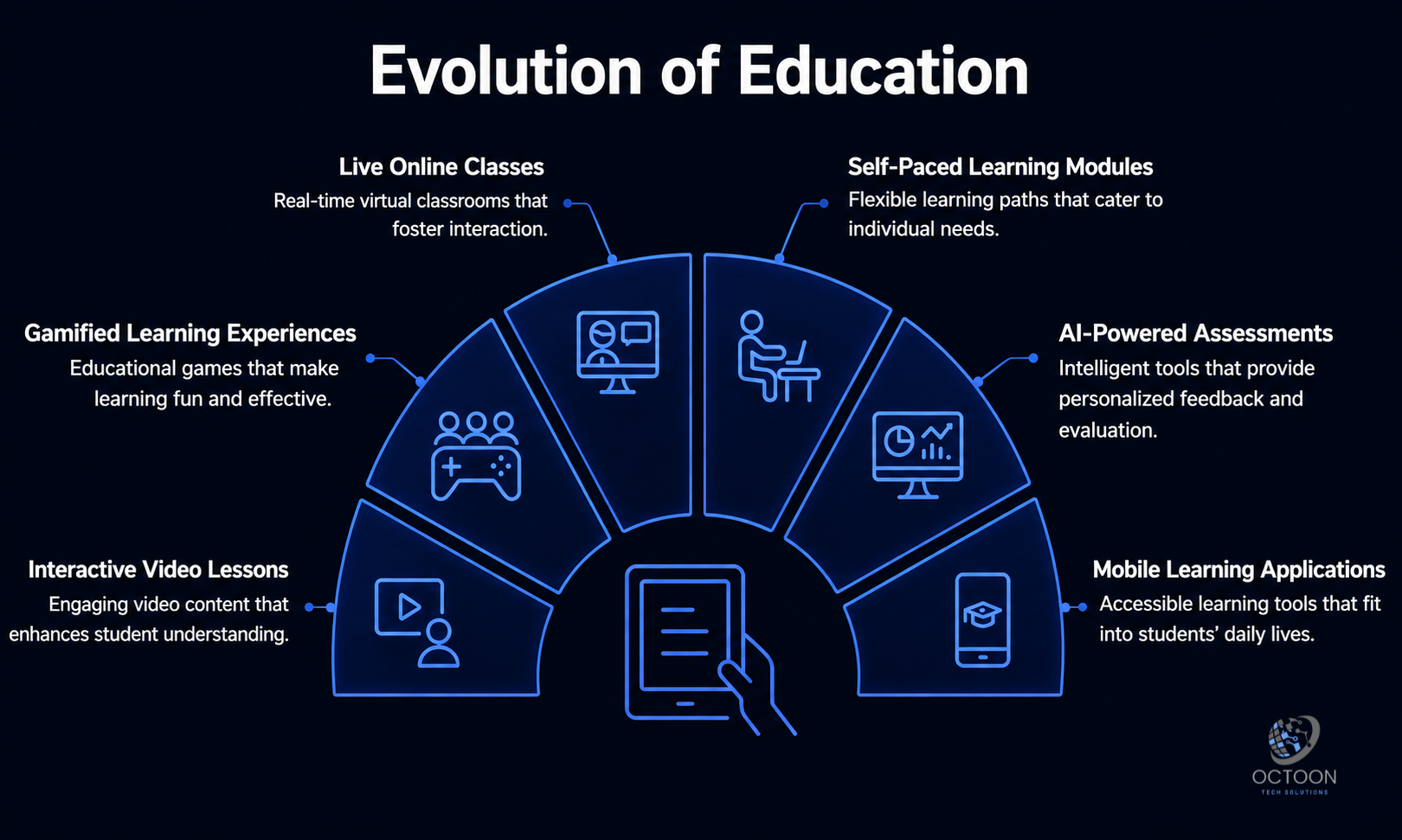
Students of today are learning in a variety of formats, such as:
- Interactive video lessons.
- Gamified learning experiences.
- Live online classes.
- Self-paced learning modules.
- AI-powered assessments.
- Mobile learning applications.
Learning is more accessible to learners, including those in remote settings and working professionals, due to technology. With these improvements in place, students can attend classes from anywhere, watch sessions again, and access learning content at their own pace.
This agility has placed greater emphasis on scalable and reliable educational technology solutions. Therefore, the schools and companies are investing in customized e-learning platforms that boost engagement and streamline learning.
Why Education Software Development Matters More Than Ever
Academic excellence is no longer the only competition for educational institutions. They are also battling for user experience, accessibility, digital infrastructure, and learning outcomes.
Custom-made educational software can address some of the challenges of modern times for institutions:
Better Student Engagement
Learning is more likely to be interactive and students maintain focus. Quizzes, live discussion, achievement badges, sims, and collaborative tools make for a more engaging learning environment.
Personalized Learning Experiences
This is one of the major benefits of using modern educational platforms. Through the use of AI and analytics, systems can suggest lessons, pinpoint low-performing areas and modify learning sequences based on student performance.
Efficient Administration
The Management of admissions, attendance, examination schedules, fee collection, and communication is carried out every day in educational institutions. These processes can be automated with integrated school management software, which also minimizes administrative tasks.
Remote Accessibility
When the world was in a time of disruption, online education was a necessity, but the convenience of it continued to make it popular. Today's learners demand mobile and cloud-based solutions where learning can take place at any time, and from any location.
Data-Driven Decision Making
Modern software for education offers insights into the performance, attendance, engagement, and completion rates of students in real time. This data can be utilized by institutions for enhancing teaching practices and supporting students.
The Rise of Learning Management Systems
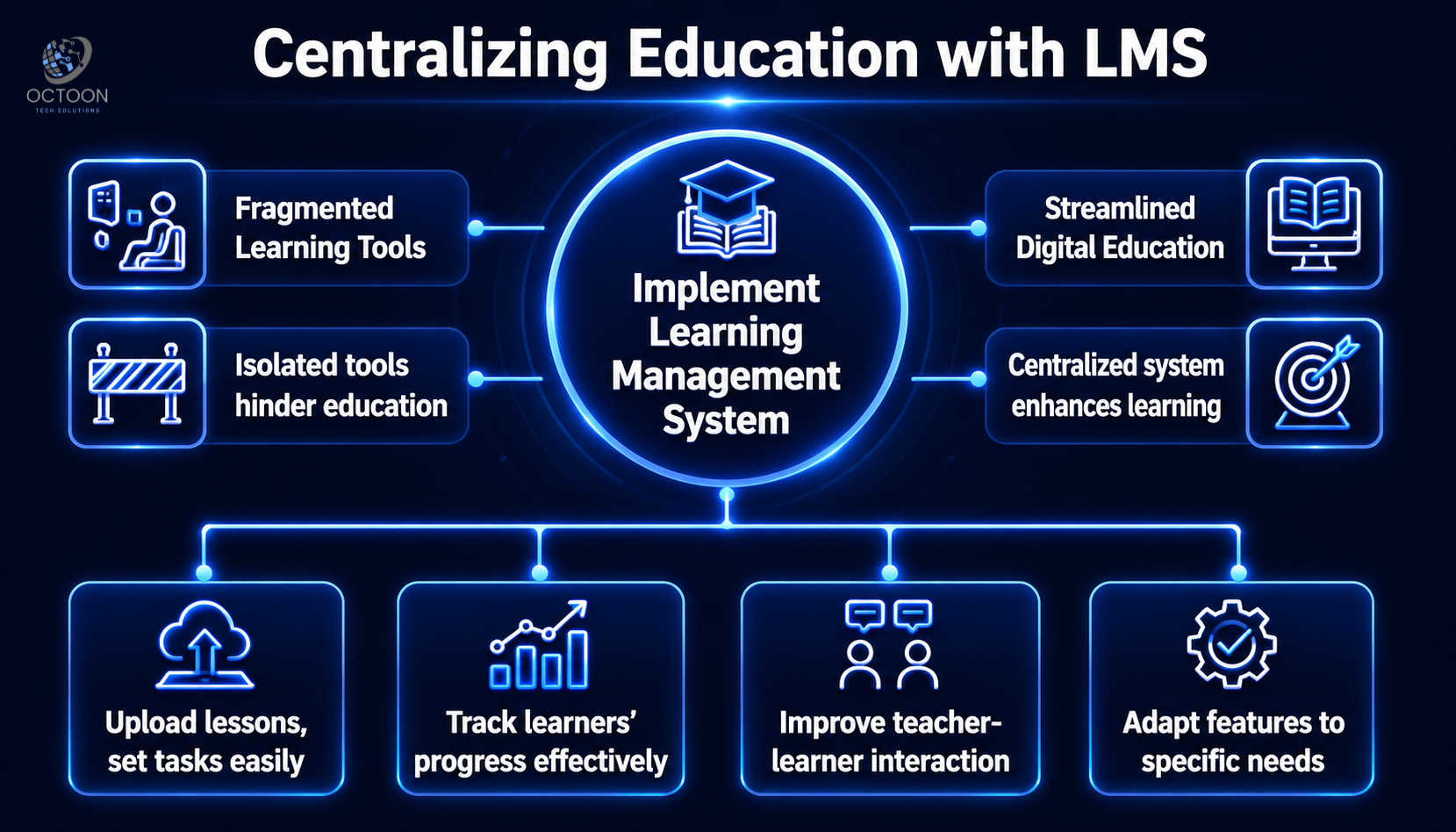
The modern Learning Management System is now becoming the backbone of digital education. They assist institutions in structuring courses, handle content, monitor learners’ progress, and enhance communication between teacher and learner.
LMSs are employed all across:
- Schools and universities.
- Corporate training programs.
- Online academies.
- Professional certification institutes.
- Coaching centers.
Rather than using isolated tools, institutions are adopting centralized systems that allow teachers to upload lessons, set tasks, assess progress and mark work with ease, all in one place.
The most significant benefit of a custom CPD monitoring platform is flexibility. Features can be customized based on organizations' teaching models, brand and operational needs.
A university might need more advanced examination modules, for instance, while a corporate training company might prioritize tracking certifications for employees and analyzing the data.
How AI Is Transforming Educational Software
AI has become one of the most promising innovations in education technology.
The AI-powered educational platforms can now:
- Evaluate the trends in students' performance.
- Recommend personalized content.
- Automate grading processes.
- Detect learning gaps.
- Provide instant tutoring support.
- Increase access by using speech and language tools.
AI is not a substitute for teachers; it augments their abilities. Teachers will have more time to dedicate to students' development than to repetitive administrative tasks.
Online course software is also integrating more and more AI chatbots. They assist students in locating resources, responding quickly to questions, and enhancing the learning experience.
The use of AI in education is gaining traction, with the demand for intelligent education SaaS products on the rise.
The Growing Popularity of Education SaaS Platforms
Cloud-based education SaaS solutions are transforming the delivery of education.
The SaaS approach to educational platforms has several advantages over traditional software, which must be installed and maintained at a high cost. SaaS platforms provide:
- Lower upfront costs.
- Faster deployment.
- Automatic updates.
- Remote accessibility.
- Better scalability.
- Easier collaboration.
It is particularly useful for startup businesses, coaching companies, and educational institutions that require flexible digital infrastructure without the need for significant investments.
With the ability to access and collaborate on content in real-time, many modern e-learning platforms today are running on SaaS architecture.
The subscription-based model also enables educational businesses to scale effectively when they begin to see an increase in users.
Why Custom E-Learning Platforms Are Outperforming Generic Solutions
Many educational institutions initially start with ready-made software solutions. As they mature, however, they are often restrained.
Some generic platforms might not have:
- Custom workflows.
- Advanced reporting.
- Specific integrations.
- Branding flexibility.
- Scalable infrastructure.
- Specialized learning features.
That's what leads many organizations to eventually turn to custom education software development.
Businesses can design custom e-learning platforms to meet their audience's needs and offer a distinctive learning experience. They are also more secure, scalable, and performant.
A medical training institute might need simulation-based learning modules, for instance, whereas a language-learning platform may want sophisticated speech recognition functionalities.
These special requirements are possible with a custom solution.
Mobile Learning Is Changing Student Behavior
The modern generation spends a significant amount of time on their smartphones and tablet PCs. If learning platforms fail to offer a cohesive mobile experience, they risk losing user engagement.
Mobile learning apps enable learners to:
- Study anytime and anywhere.
- Download lessons offline.
- Receive instant notifications.
- Participate in live discussions.
- Monitor progress instantaneously.
The shift towards mobile learning is influencing how learning developers create educational platforms. This transition to mobile learning is affecting the design of these platforms.
The effectiveness of responsive interfaces, easy navigability, and quick loading times are now crucial for any successful educational software.
Cybersecurity and Data Privacy in Educational Platforms
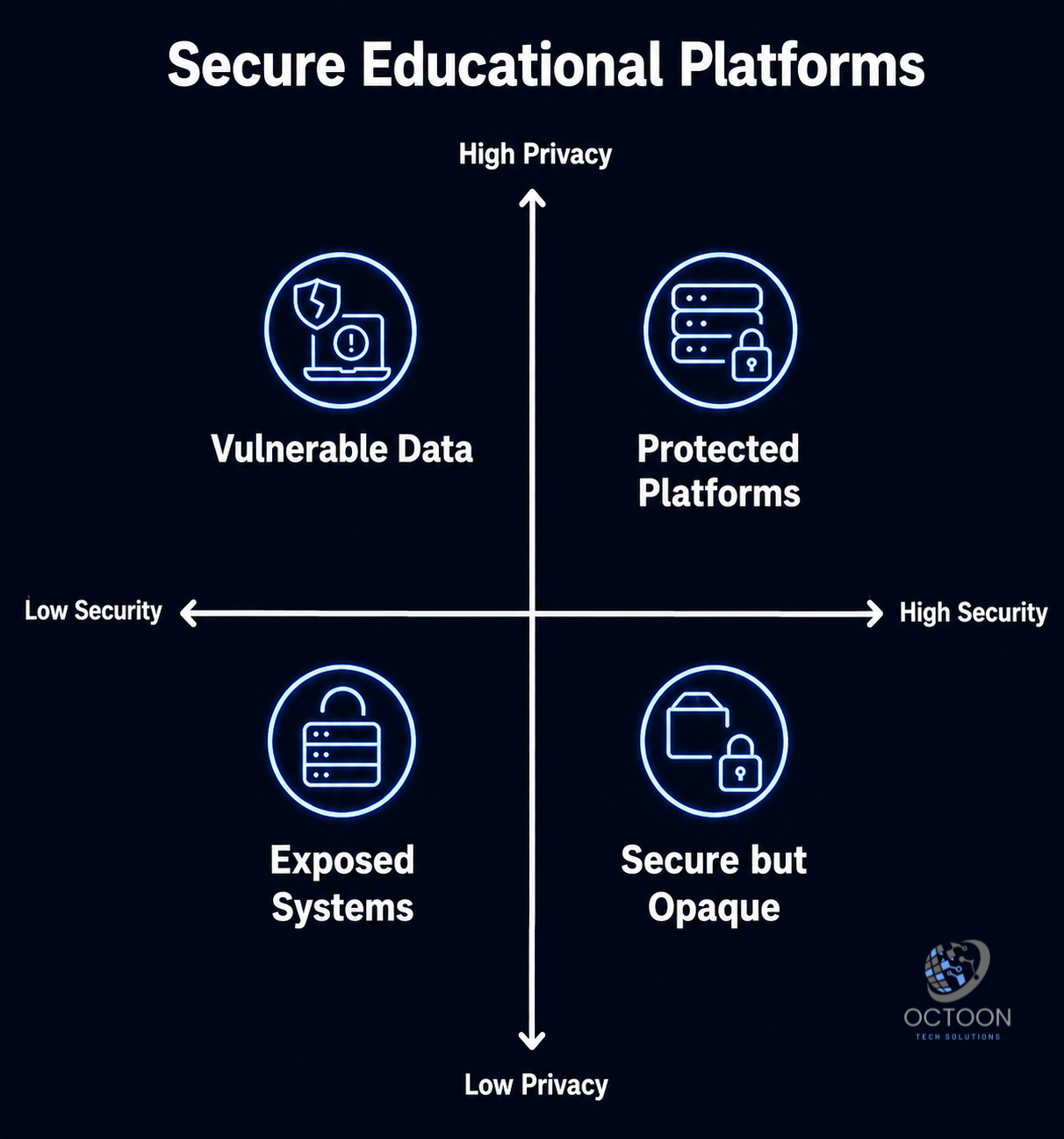
Sensitive student information like academic records, payment information, and personal information is handled by educational institutions.
With the growth of digital learning, cybersecurity is taking center stage.
Secure education software should have:
- Data encryption.
- Multi-factor authentication.
- Role-based access control.
- Secure cloud infrastructure.
- Regular security updates.
- Conformity to privacy laws.
A security breach can impact the reputation of an institution and the trust of its users.
Therefore, it is essential to employ professional software development practices for modern educational platforms.
The Role of Analytics in Modern Learning
Data analytics is aiding in the understanding of student learning.
Today's school education systems monitor:
- Course completion rates.
- Student participation.
- Quiz performance.
- Attendance patterns.
- Learning behavior.
- Engagement metrics.
These insights can help institutions enhance teaching practices and reach out to students that could need extra support.
Additionally, a business can use analytics to fine-tune its online course software, identify successful lessons, and pinpoint areas where students drop off.
A data-driven approach is transforming education to be more efficient and outcome-driven.
How Education Software Supports Hybrid Learning
Hybrid Learning is a blend of in-person classroom learning and digital learning.
This model is gaining popularity as it offers flexibility without compromising on face-to-face interactions.
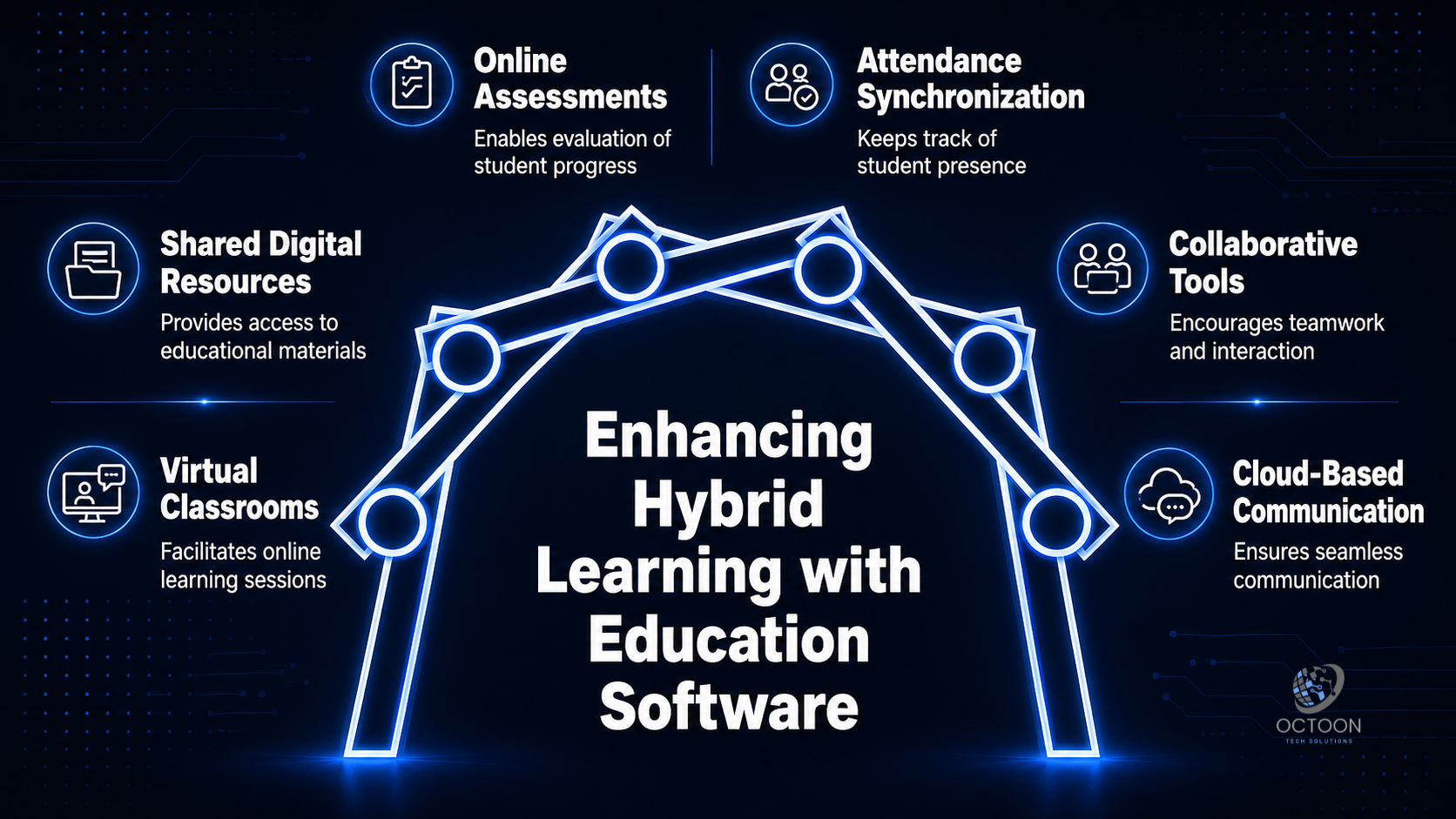
Hybrid learning can be enabled with the use of educational software by:
- Virtual classrooms.
- Shared digital resources.
- Online assessments.
- Attendance synchronization.
- Collaborative learning tools.
- Cloud-based communication systems.
Establishing a successful hybrid learning program can lead to enhanced accessibility and efficiency.
Challenges in Education Software Development
The opportunities are huge, but so are the challenges of building the educational software.
Balancing Simplicity and Functionality
Learning sites should be user-friendly for the student, teacher, and administrative user. Too complicated interfaces may result in lower adoption rates.
Scalability
As the number of users increases, the platform should be able to accommodate the surge of traffic without compromising performance.
Accessibility
This is where educational software should help students who are able to learn differently.
Integration Requirements
Integrations with payment gateways, CRM systems, video conferencing, and third-party applications are common requirements for institutions.
Continuous Updates
The technology is rapidly changing, and education platforms need to be updated frequently and feature enhancements.
That is why it's essential to hire a development partner who has extensive experience.
Why Businesses Are Investing in EdTech Solutions
The global EdTech market remains in growth as digital education is now a must. Scalable learning technologies are valuable to businesses over the long-term.
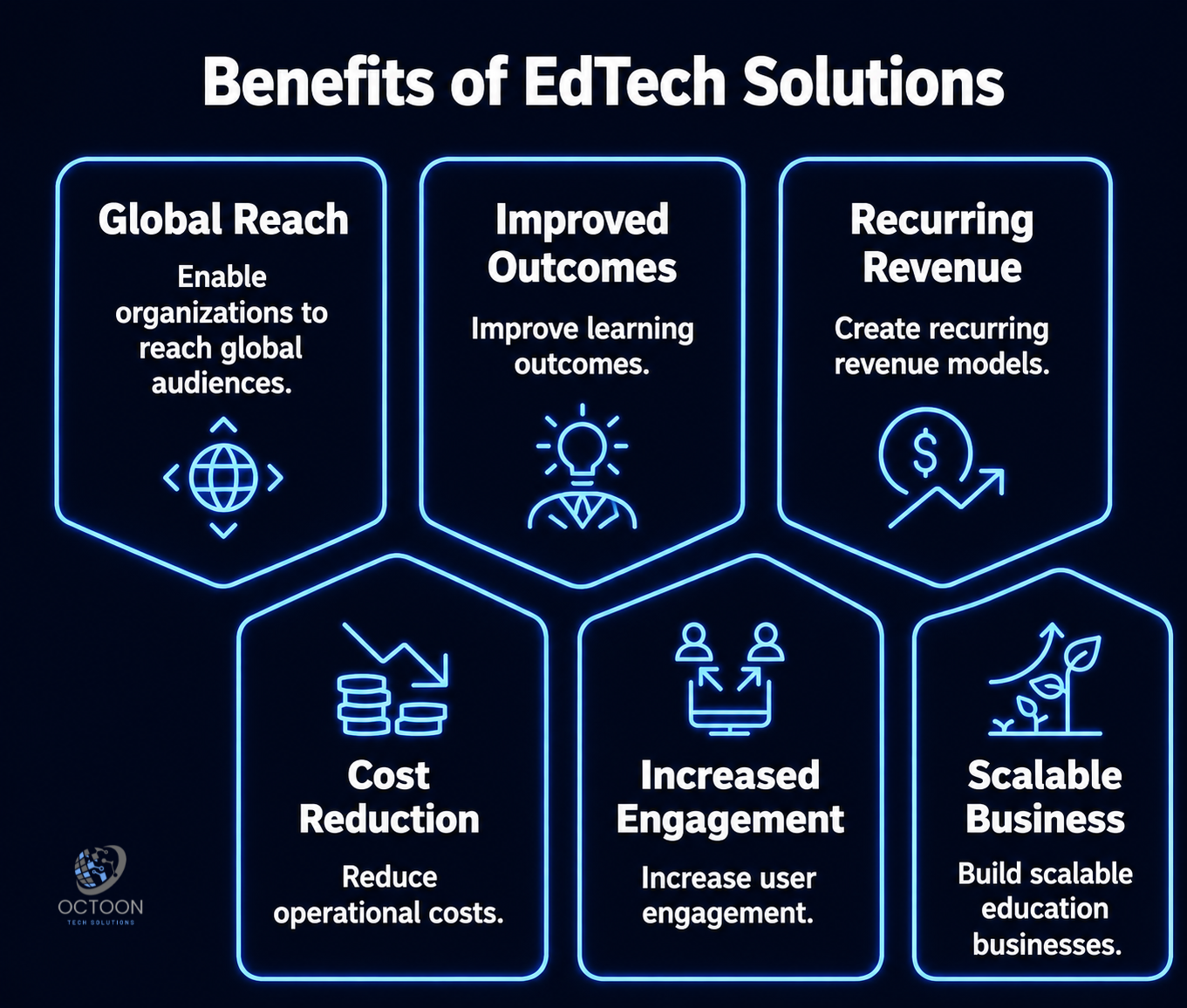
Educational software is being purchased because it can enable organizations to:
- Reach global audiences.
- Reduce operational costs.
- Improve learning outcomes.
- Increase user engagement.
- Create recurring revenue models.
- Build scalable education businesses.
Whether it's a startup opening an online school or a university updating its systems, software is now the backbone of education delivery.
How Octoon Tech Helps Businesses Build Modern Education Platforms
High-quality educational software development demands more than coding skills. It demands an understanding of user behaviour, scalability, engagement, and the trends in digital learning.
Octoon Tech creates innovative software solutions that are designed to help businesses create a powerful educational platform. The company's main business is developing scalable and user-friendly digital experiences, whether it's a learning management system, an online course platform, a school management software-as-a-service (SaaS), or a custom-built school management digital platform.
Their development model is based on:
- Custom software architecture.
- Mobile-responsive design.
- Cloud-based infrastructure.
- Secure platform development.
- Performance optimization.
- User-focused interfaces.
For educational businesses aiming to establish sustainable digital expansion, the key is in finding the right technology partner.
The Future of Education Software Development
Learning will be even more individual, participatory, and technologically rich in the future.
Emerging trends include:
- AI-powered adaptive learning.
- Virtual reality classrooms.
- Augmented reality simulations.
- Blockchain-based certifications.
- Voice-enabled learning assistants.
- Predictive analytics for student success.
The continuous advancement of these technologies will drive the future of education software development, influencing the way knowledge is shared and accessed across the globe.
Institutions that make informed, innovative digital solutions early will have the potential to attract students, enhance learning, and better compete in an ever-changing education sector.
Conclusion
Education is no longer limited to traditional classrooms and fixed timetables. With technology, learning has become flexible, accessible, and highly personalised. Digital innovation is transforming nearly every facet of today's education, from LMSs and online course software to intelligent analytics and education SaaS solutions.
Organizations and companies that purchase customized software for education aren't just buying new equipment. They are creating deeper learning experiences, streamlining operations, and planning for a future in education.
When your organization has a vision for a digital learning platform that you're looking to launch or scale, a good development company can help bring the vision to fruition in a manner that will result in a product that is capable of scaling and being future-ready.
Explore the potential of Octoon Tech in developing effective educational software solutions that support current students and promote future development.
Frequently Asked Questions
1. What is education software development, and why does it matter today?
Education software development creates LMSs, mobile apps, and school management systems that improve access, engagement, and administration in modern learning, with AI and analytics now central to personalization and outcomes.
2. How does an LMS improve online learning?*
An LMS centralizes course delivery, progress tracking, communication, and assessments, making learning more organized and scalable for schools, universities, and training programs.
3. Why choose custom education software instead of generic tools?
Custom platforms fit specific workflows, integrations, branding, and scalability needs, which generic tools often cannot support as institutions grow.
4. How can Octoon Tech help build a future-ready education platform?
Octoon Tech can design secure, mobile-responsive, cloud-based, and scalable EdTech solutions for schools, academies, and training businesses.