
Data Analytics as a Service: How It Helps Businesses Scale Efficiently
Introduction
Organizations today generate massive amounts of information from customer interactions, digital platforms, financial transactions, and internal operations. Handling such large and complex datasets is not possible with traditional methods. Big Data Analytics addresses this challenge by using advanced techniques to process, organize, and interpret data at scale. Instead of relying on assumptions, businesses can identify patterns, track performance, and make decisions backed by reliable evidence.
As data continues to grow, companies are adopting modern approaches such as data analytics as a service and specialized business analytics services. These solutions make it possible to access powerful analytics without building costly infrastructure, while also gaining expert guidance to convert raw information into actionable insights. In the following sections, we will discuss the role of big data analytics, its benefits, service models, and the impact it can create across different industries.
What is Data Analytics as a Service (DAaaS)?
Data Analytics as a Service (DAaaS) is a cloud-based solution where businesses use external platforms and tools to analyze their data without building heavy infrastructure on their own. Instead of investing in expensive servers, software, and in-house data teams, organizations can access analytics capabilities through a subscription or pay-as-you-go model.
With DAaaS, companies upload their data securely to the cloud, where advanced tools process it to deliver insights such as customer trends, sales forecasts, or risk assessments. This approach removes the burden of managing hardware and software updates while ensuring that even small and mid-sized businesses can take advantage of powerful analytics.
The main benefits of DAaaS include:
- Scalability: A business can begin with a small setup and later increase its data and analytics capacity as the company grows. This means you don’t have to buy everything at once you can expand step by step.
- Cost efficiency: There’s no need to spend a huge amount of money at the start to buy expensive systems or infrastructure. Instead, you only pay for what you use, which makes it more affordable.
- Accessibility: Because the system is cloud-based, people can log in and see the insights or reports from anywhere and at any time. They don’t have to be in the office; they just need an internet connection.
- Faster decision-making: The system already has dashboards and reports prepared, so businesses can quickly see what’s happening and make decisions without wasting time on manual analysis.
Benefits of DAaaS for Businesses
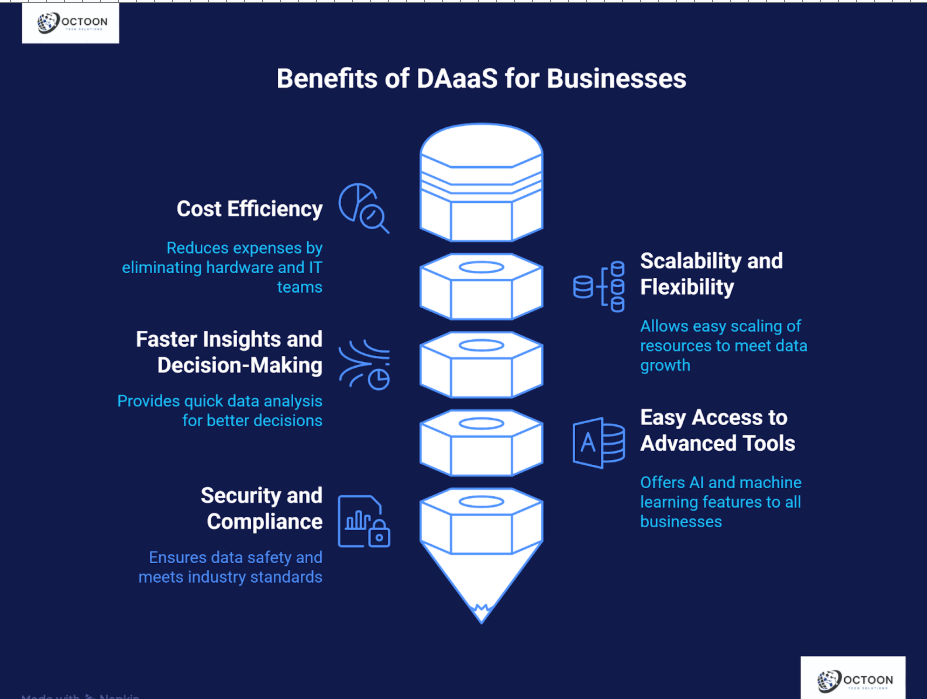
Data Analytics as a Service (DAaaS) offers several advantages that make it a practical choice for modern organizations. Instead of building costly systems in-house, businesses choose cloud-based solutions to manage and analyze their data effectively. Here are the key benefits:
- Cost efficiency
DAaaS removes the need for expensive hardware and large IT teams. Companies can pay only for what they use, which keeps costs under control.
- Scalability and flexibility
As a company grows, so does its data. DAaaS allows businesses to scale resources up or down easily, ensuring they always have the right capacity without overspending.
- Faster insights and decision-making
With powerful analytics tools hosted on the cloud, companies can turn raw data into insights quickly. This supports better decisions in areas like marketing, operations, and customer engagement.
- Easy access to advanced tools
Many DAaaS platforms come with built-in AI and machine learning features, giving even small and mid-sized companies access to the same advanced technology used by larger enterprises.
- Security and compliance
A reliable DAaaS provider ensures that data is stored safely, with protections that meet industry standards. This is especially important for businesses working in regulated industries such as finance or healthcare.
By adopting DAaaS, organizations can focus more on strategy and execution while leaving the heavy lifting of infrastructure and analytics to specialized platforms. For many firms exploring modern business tech solutions, DAaaS becomes a natural first step.
What are Business Analytics Services?
While DAaaS focuses on providing infrastructure and tools, business analytics services are about applying expertise to make sense of the data. In simple words, these services involve studying how a business operates and identifying ways to improve growth, efficiency, and customer satisfaction.
Key areas where business analytics services are applied include:
- Marketing analytics: Understanding which campaigns bring the best results and how to reach the right audience.
- Sales analytics: Tracking sales performance, customer buying patterns, and revenue trends.
- Financial analytics: Monitoring cash flow, profitability, and risk to support stable growth.
- Customer service analytics: Reviewing customer feedback and service performance to improve overall experience.
DAaaS vs. Business Analytics Services
The difference between the two can be explained simply:
- DAaaS provides the infrastructure and tools on the cloud to store and process data.
- Business analytics services focus on consulting, insights, and strategy to guide decision-making.
Together, both approaches help organizations maximize the real value of their data. DAaaS makes advanced analytics accessible, while business analytics services ensure the results are applied effectively to business goals.
Types of Business Analytics Services
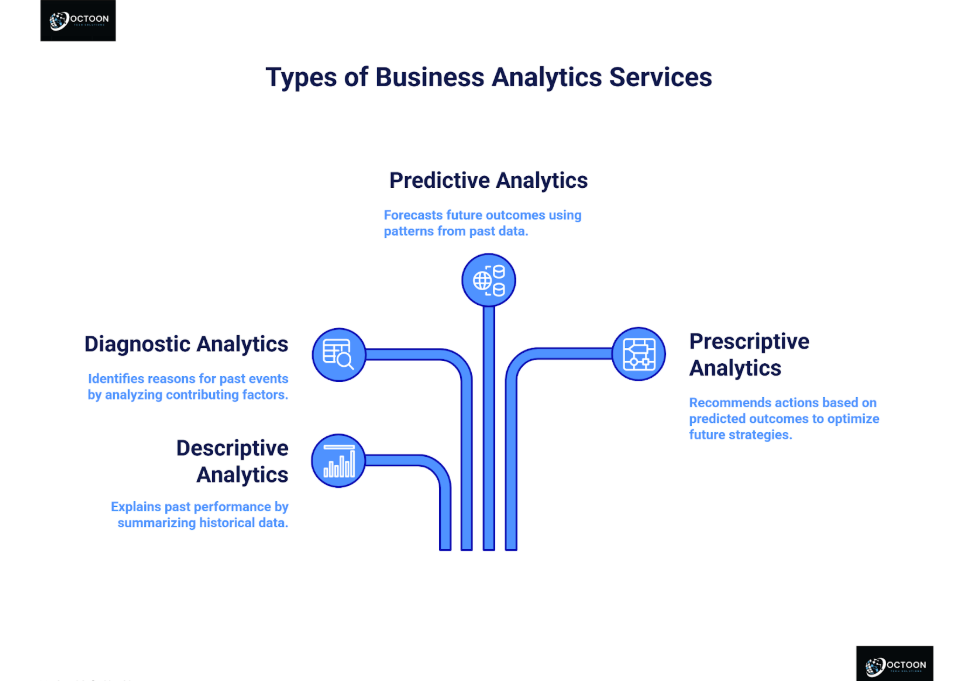
Business analytics can be divided into four main types. Each one helps organizations understand their data in a different way:
- Descriptive Analytics – What happened?
This type explains past performance. For example, a retail store may use descriptive analytics to see how many units of a product were sold last month. It answers the “what happened” question by summarizing historical data.
- Diagnostic Analytics – Why did it happen?
After knowing what happened, businesses need to know why. For instance, if sales dropped in a particular month, diagnostic analytics can show whether it was due to fewer promotions, seasonal changes, or competitor activity.
- Predictive Analytics – What might happen?
Predictive analytics uses patterns from past data to forecast future outcomes. A bank, for example, can predict which customers are most likely to apply for a loan in the next quarter.
- Prescriptive Analytics – What should be done?
This type goes one step further by recommending actions. A food delivery company may use prescriptive analytics to suggest adding more drivers in areas where demand is expected to rise, ensuring faster deliveries and satisfied customers.
Together, these four types give businesses a complete view of their data from past performance to future strategies.
Benefits of Business Analytics Services
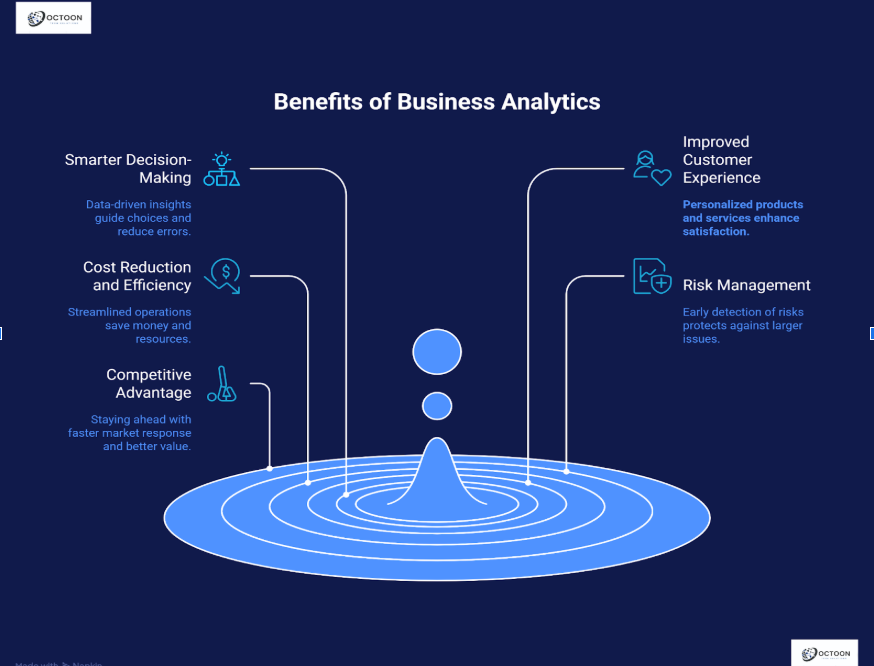
Using business analytics services brings a range of practical benefits that directly impact growth and efficiency.
- Smarter decision-making
Instead of relying on guesswork, managers can use business analytics services to gain data-driven insights that guide their choices, reduce errors, and improve outcomes.
- Improved customer experience
By studying customer preferences and feedback, businesses can offer more personalized products and services, leading to higher satisfaction and loyalty.
- Cost reduction and efficiency
Analytics highlights inefficiencies, such as wasted resources or slow processes. Fixing these issues saves money and makes operations smoother.
- Risk management
Early detection of financial risks, fraud, or market changes helps companies protect themselves and act before small issues grow into bigger problems.
- Competitive advantage
Companies that use analytics effectively stay ahead of competitors. They can respond faster to market shifts and deliver better value to customers.
Business analytics services, when combined with tools like Data Analytics as a Service (DAaaS), give organizations the ability to not only collect and process data but also apply it in ways that strengthen their overall business strategy.
Challenges Businesses Face Without Analytics
When companies don’t use analytics, they often run into problems that slow down growth and weaken decision-making:
- Data silos
Information is stored in separate departments like sales, finance, marketing, or operations without proper connection. This makes it difficult for leaders to see the full picture of the business.
- Guesswork in decisions
Without data insights, many choices rely on intuition or incomplete information. This increases the chances of errors and missed opportunities.
- Missed opportunities
Important patterns in customer behavior, market demand, or operational efficiency remain hidden. Businesses may lose potential growth simply because they cannot see these signals.
- Higher risks and compliance issues
Lack of proper monitoring makes organizations more vulnerable to risks such as financial fraud, operational losses, or failing to meet industry regulations.
These challenges show why analytics is not just an optional tool anymore it is a necessity for sustainable growth.
How DAaaS and Business Analytics Work Together
While Data Analytics as a Service (DAaaS) and Business Analytics Services may sound similar, they play different but complementary roles.
- DAaaS = platform, infrastructure, and tools
DAaaS provides the technology foundation. It gives businesses access to secure cloud platforms, advanced software, and data processing capabilities without building everything in-house.
- Business Analytics = expertise, interpretation, and strategies
Business analytics takes the data processed by DAaaS and turns it into meaningful insights. Experts analyze trends, explain results, and create strategies tailored to business goals.
When combined, DAaaS and business analytics create a complete data-driven ecosystem. The platform handles the heavy work of storing and processing information, while analytics experts ensure the results are applied in real business decisions. This partnership allows companies to reduce costs, move faster, and gain a competitive advantage in their industries.
How to Choose the Right Provider
Choosing the right company for analytics is very important. The right partner makes sure your data is safe, easy to use, and useful for business growth. Here are some points to check before making a decision:
- Security and compliance
Data is often sensitive, especially in industries like healthcare, banking, or retail. A reliable provider should follow strong security measures and comply with all relevant regulations.
- Scalability and integration
The solution should be able to grow with the business. It must also integrate smoothly with existing systems, such as ERP or CRM platforms, without causing disruption.
- Industry expertise
Industry experience is important because companies that know a particular field understand its problems better. This helps them provide solutions that actually work. For example, Octoon Technologies has experience helping different businesses, so their solutions fit real needs.
- Support and customization options
Every business is unique. Good providers offer strong customer support and the ability to customize solutions, ensuring that the analytics system fits business goals rather than forcing one standard model.
By keeping these points in mind, companies can partner with a provider that not only delivers tools but also ensures long-term value.
Future Trends in Data & Business Analytics
The field of analytics is moving fast, and several trends are shaping its future:
- AI-driven analytics
Artificial intelligence is being used to detect patterns and predict outcomes more accurately. This makes analytics faster and more reliable.
- Real-time insights
Businesses no longer want to wait days or weeks for reports. Real-time analytics delivers instant updates, helping organizations react quickly to market or operational changes.
- Self-service analytics for non-technical teams
Tools are becoming simpler, so even people without technical backgrounds can run reports and explore data themselves. This reduces dependence on IT teams and speeds up decision-making.
- Growing demand for predictive and prescriptive analytics
Companies want to go beyond “what happened” and “why it happened.” They are investing more in solutions that can predict future scenarios and recommend the best actions to take.
These trends show that analytics will continue to move toward being faster, smarter, and easier to use making it accessible to businesses of all sizes.
Conclusion
Big Data Analytics allows businesses to understand their information clearly and make decisions based on real evidence. It helps identify trends in customer behavior, detect problems in daily operations, and identify opportunities that can improve growth and efficiency. By analyzing data carefully, companies can plan better strategies, serve customers more effectively, and use their resources wisely.
Services like Data Analytics as a Service and business analytics solutions make it easier for companies of all sizes to access powerful tools without heavy investment in infrastructure. These services provide real-time insights, predictions, and recommendations, helping businesses react quickly to changes, reduce risks, and make informed decisions that support long-term growth.
Frequently Asked Questions (FAQs)
1. What is the difference between Big Data Analytics, DAaaS, and Business Analytics Services?
Big Data Analytics is the process of examining large amounts of data to find patterns, trends, and useful information. Data Analytics as a Service (DAaaS) provides the tools and cloud infrastructure to analyze data without building expensive systems in-house. Business Analytics Services focus on using that data to make practical decisions, improve strategies, and guide growth. Together, they help businesses understand data, act on insights, and grow efficiently.
2. How can small businesses benefit from Data Analytics as a Service?
Small businesses often don’t have large IT teams or expensive software. DAaaS allows them to use advanced analytics tools on the cloud through a subscription model. They can track customer behavior, forecast sales, and identify risks without heavy upfront costs. This helps them make faster, smarter decisions and compete with larger companies using the same powerful insights.
3. Why are Business Analytics Services important for decision-making?
Business Analytics Services turn raw data into actionable advice. By analyzing sales, marketing, finance, and customer interactions, these services help managers understand what works, what doesn’t, and what changes to make. This reduces mistakes, improves efficiency, enhances customer satisfaction, and gives businesses a competitive edge in their market.