
Banking CRM Software Development for Smarter Client Management
Introduction
The banking industry has always been built on trust and long-term relationships. Customers expect their bank to understand their needs, keep their money secure, and provide guidance when making financial decisions. But today, with digital apps, online banking, and fintech startups, customer expectations have changed. People want faster service, personalized offers, and instant problem resolution.
This change has made banking CRM software development very important. A well-designed CRM (Customer Relationship Management) system allows banks to organize client data, track every interaction, and deliver services that match individual customer needs. Instead of relying on outdated methods, banks can use a CRM platform to connect with clients in smarter and more meaningful ways.
In this article, we’ll discuss why banks need modern CRM solutions, what features are most important, and how financial institutions can benefit from adopting a secure, compliant, and future-ready CRM system.
What is Banking CRM Software Development?
Banking CRM software development is the process of creating a system that helps banks manage all client relationships in one secure and organized platform. Instead of relying on disconnected spreadsheets or outdated tools, a banking CRM keeps everything transactions, communication history, compliance checks, and service requests in one place. This helps staff understand each client’s needs, respond faster, and build long-term trust. A secure banking CRM system also protects sensitive financial data while supporting strict rules such as KYC and AML.
The purpose of banking CRM software development is not just to record information but to make banking more personal, efficient, and safe. With the right system, banks can automate routine tasks, speed up onboarding, and offer customized products like loans or investment plans that match customer goals. Clients enjoy smoother service, quicker support, and the confidence that their data is managed responsibly.
Why Traditional Banking Needs a Modern CRM
Many banks are still using spreadsheets, manual tools, or old systems to manage client information. These methods create several problems:
- Unorganized data: Customer details are spread across multiple departments, making it hard to get a complete view of a client’s financial record.
- Slow processes: Manual data entry and verification slow down services like loan approvals or new account openings.
- Weak personalization: Without centralized data, banks cannot offer customized products such as targeted credit cards, investment options, or loan packages.
- Compliance risks: Financial institutions must follow strict rules like KYC (Know Your Customer) and AML (Anti-Money Laundering). Legacy systems often lack built-in compliance tools.
Customers today compare their banking experience to what they get from apps like Amazon or Netflix. They expect banks to recognize them, remember past interactions, and provide recommendations that feel personal. If a bank cannot do this, customers may easily switch to a competitor.
By investing in a modern CRM, banks can overcome these challenges. A CRM for financial institutions acts as a single source of truth, where every detail about a client's transactions, preferences, communication history, and compliance checks is stored in one secure system. This not only improves efficiency inside the bank but also builds stronger relationships with clients.
For insights on adapting systems to unique needs, custom CRM software development can provide guidance you can read more in this blog.
Core Features of Banking CRM Solutions
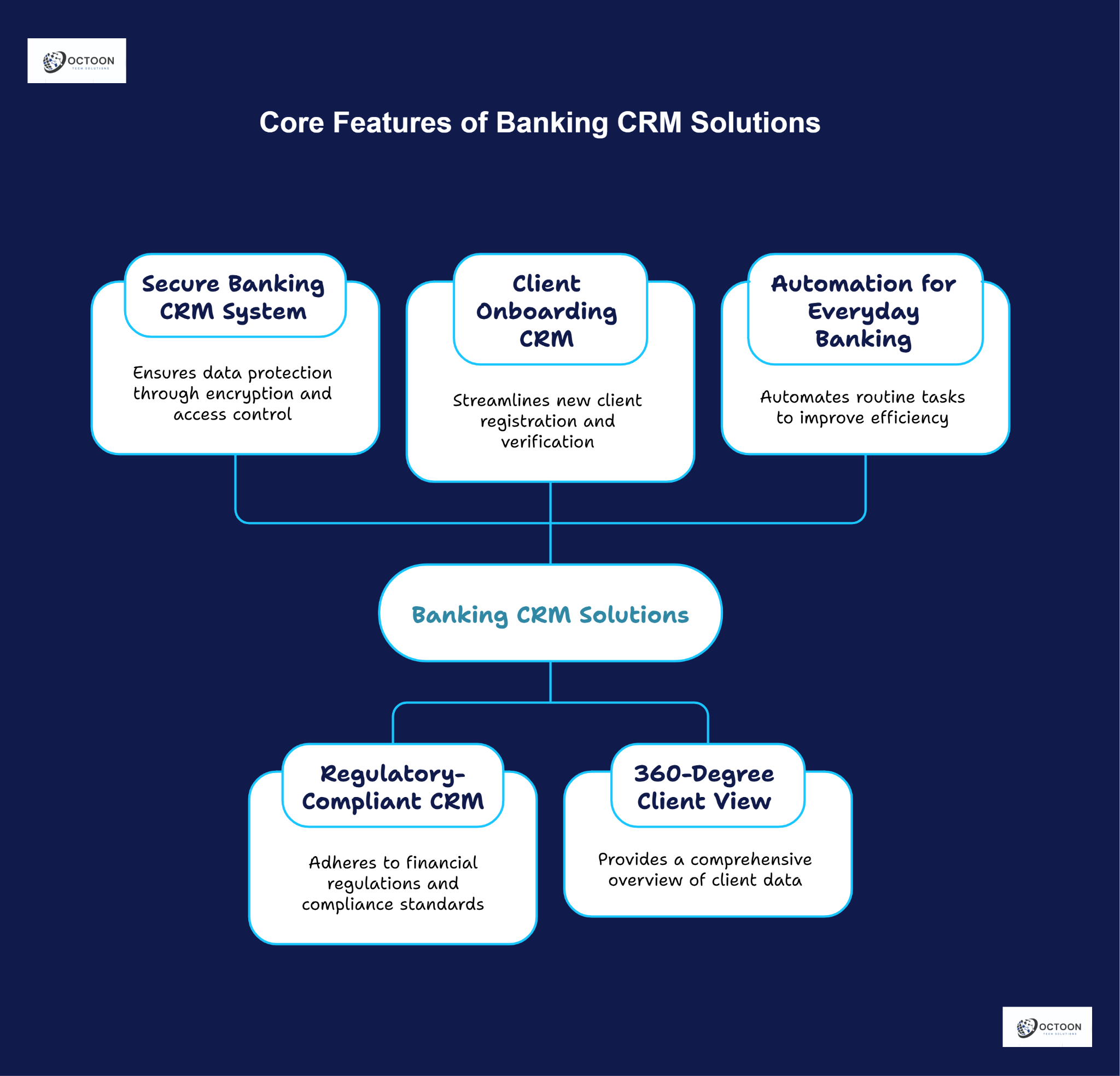
A banking CRM is not just another software it is a system designed to make client relationships stronger and daily banking tasks easier. To really benefit from it, banks need certain key features. Let’s look at them one by one.
1. Secure Banking CRM System
Trust is the heart of banking. Customers share sensitive details like account numbers, income, and financial history. If this data is not protected, it can lead to fraud or loss of trust.
A secure banking CRM system uses encryption, role-based access, and multi-factor authentication to keep every piece of information safe. This means only authorized staff can view or edit client records. Strong security also builds confidence, as clients know their bank is serious about protecting their privacy.
2. Regulatory-Compliant CRM
Banks work under strict rules from financial authorities. They must follow regulations like KYC (Know Your Customer), AML (Anti-Money Laundering), and GDPR (for data privacy). If these rules are not followed, banks face heavy fines and legal issues.
A regulatory-compliant CRM comes with built-in tools to meet these requirements. For example, it can automatically verify customer identity documents, track suspicious transactions, and keep a record of all client interactions. This not only keeps banks safe from penalties but also ensures fair and transparent banking for customers.
3. Client Onboarding CRM
Opening a new bank account or applying for a loan should be smooth, not stressful. Unfortunately, in many banks, onboarding takes too long because of paperwork and manual checks.
A client onboarding CRM solves this by automating the process. New customers can submit documents digitally, and the system quickly verifies them. Bank staff can track the status in real time, and customers get updates without waiting in long queues. This makes the first impression strong and increases the chances that clients will stay loyal to the bank.
4. 360-Degree Client View
One of the biggest advantages of a modern CRM is that it brings all client details into one screen. This includes account history, past communication, financial goals, and even service issues. With this 360-degree view, bank employees don’t need to switch between multiple systems.
This feature allows personalized service. For example, if a client recently inquired about home loans, the system can alert the relationship manager to follow up with relevant offers. Such proactive service makes clients feel valued.
5. Automation for Everyday Banking
Manual work slows everything down. With CRM automation, banks can set reminders for payment collections, send alerts for upcoming renewals, and even schedule follow-ups with clients.
This reduces errors and saves time for both staff and clients. It also ensures no important task is forgotten, which improves overall service quality.
A modern CRM for banks is not just about storing information. It is about creating smarter systems where client data, compliance, security, and communication come together. With features like a secure banking CRM system, regulatory-compliant CRM, and client onboarding CRM, banks can handle challenges more effectively and build stronger trust with their customers.
Benefits of Banking CRM Solutions for Banks and Clients
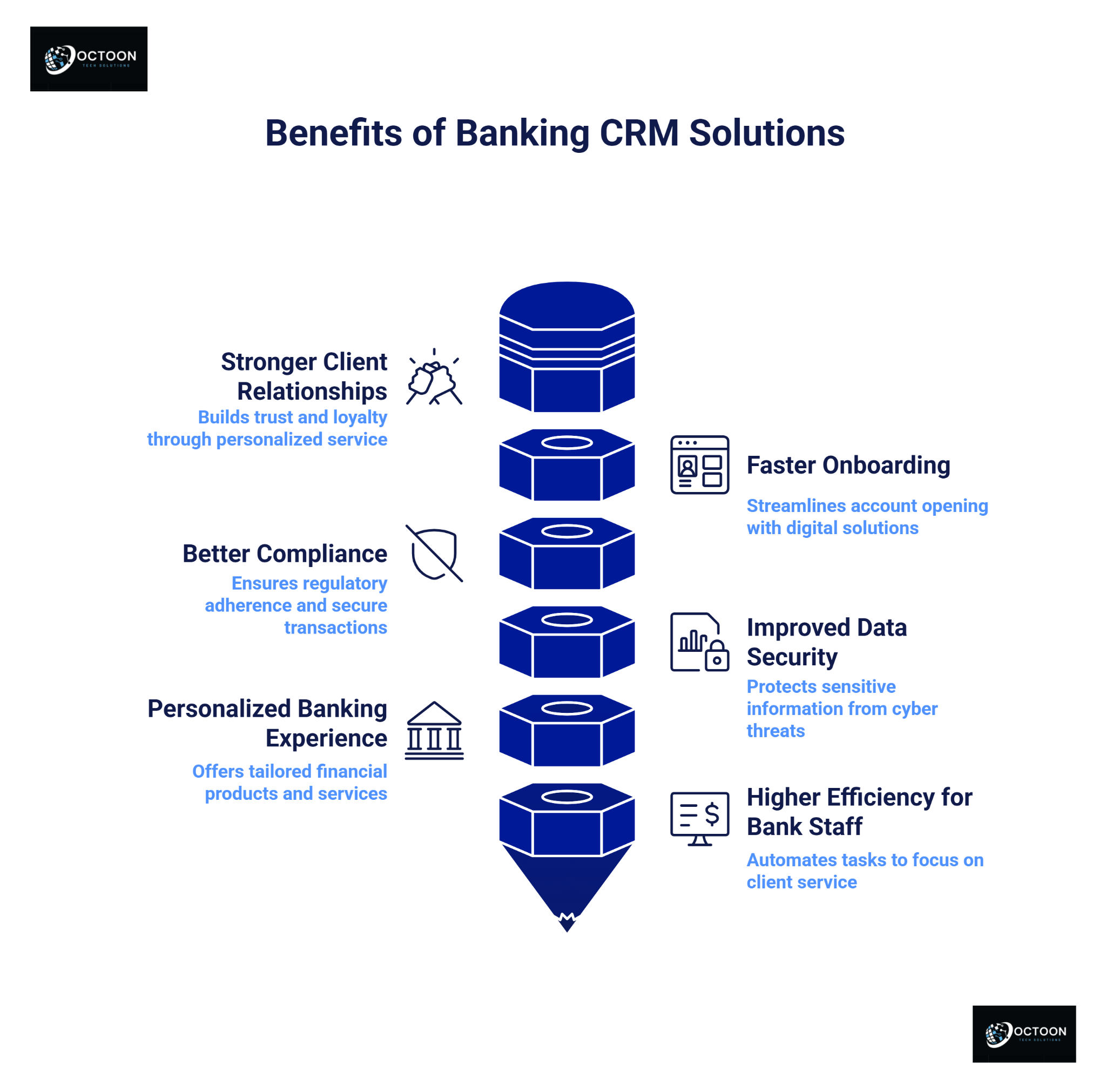
Banking CRM helps financial institutions bring all client information, interactions, and services into one place. By doing so, banks improve efficiency, reduce errors, and deliver a better customer experience. Many sources have highlighted the importance of CRM in banking, below are the main benefits of using CRM in banking.
1. Stronger Client Relationships
For clients, trust and personal attention matter more than anything. A banking CRM software development project gives banks the power to understand each client’s history, preferences, and needs in detail.
For example, if a customer often asks about investment plans, the system reminds the bank’s team to share updates on suitable products. When clients see that their bank remembers them and gives relevant advice, they feel valued and this builds long-term loyalty.
2. Faster and Easier Onboarding
Nobody likes filling out endless forms or waiting for days just to open an account. With a client onboarding CRM, the whole process becomes quicker and smoother.
New clients can upload documents online, and verification is done in minutes instead of days. This saves time for both the client and the bank. Modern banks now rely on the right business tech solutions to make onboarding faster, smarter, and more secure. This not only saves time for both the client and the bank but also ensures accuracy. A fast onboarding experience creates a positive first impression, making customers more likely to use other services as well.
3. Better Compliance and Reduced Risk
Banks face strict regulations. Mistakes in compliance can lead to heavy fines and damaged reputation. A regulatory-compliant CRM helps avoid this by automating checks like KYC and transaction monitoring.
Clients also benefit because their transactions are handled in a safe and transparent way. They know their money is in a system that follows the law, which gives them peace of mind.
4. Improved Data Security
Cybersecurity is a top concern in the financial world. A secure banking CRM system ensures that sensitive data such as account details and identification documents are well-protected.
Banks gain by reducing the chances of fraud or data leaks. Clients gain confidence, knowing their private information will not be misused. This security trust is one of the strongest reasons people stay with a bank.
For businesses looking to strengthen data security across their systems, these insights on network security services show how proper protection measures can safeguard sensitive information.
5. Personalized Banking Experience
Generic banking no longer works. People expect services tailored to their unique financial goals. With CRM insights, banks can offer customized loan plans, investment suggestions, or savings products.
For clients, this means they get offers that truly match their needs instead of random promotions. For banks, personalized service increases sales and customer satisfaction at the same time.
6. Higher Efficiency for Bank Staff
Bank employees often spend hours switching between systems, checking documents, and managing follow-ups. CRM automation reduces this workload.
Routine tasks like sending payment reminders, updating client records, or scheduling calls are handled automatically. This allows staff to focus on more valuable work, like giving financial advice or solving client issues quickly. Clients notice the difference when their requests are answered faster and more accurately.
How to Choose the Right Banking CRM Software
Choosing the right CRM is a critical decision for any bank or financial institution. A well-selected CRM improves client relationships, increases efficiency, and ensures compliance. Here are the main points to consider while selecting a CRM system for your bank.
1. Check for Security and Data Protection
Data security should always come first. Make sure the CRM is a secure banking CRM system. Look for features such as data encryption, secure login methods, and role-based access. These ensure that only authorized personnel can view or update sensitive client information.
For clients, this means their personal and financial details remain safe. For banks, it reduces the risk of fraud or data breaches, which protects the bank’s reputation.
2. Verify Compliance Features
Banks must follow rules like KYC, AML, and other regulatory standards. A regulatory-compliant CRM is designed to handle these requirements automatically.
Before choosing a CRM, check if it supports automatic verification, keeps logs of all client interactions, and generates compliance reports. This ensures your bank stays legally safe and builds trust with customers.
3. Evaluate Client Onboarding Capabilities
The first experience a customer has with a bank sets the tone for their entire relationship. A CRM with strong client onboarding features can make this process smooth and fast.
Look for CRMs that allow digital document submission, quick verification, and real-time status updates. This reduces waiting time and gives clients a positive first impression, encouraging loyalty from the start.
4. Look for Integration Options
A good CRM must work well with your existing banking systems. Check if it can integrate with core banking software, mobile banking apps, payment gateways, and other tools used by your institution.
Integration ensures that all data flows seamlessly across platforms, which improves efficiency and reduces errors. It also allows employees to access client information from one place without switching between multiple systems.
5. Consider Customization and Scalability
Every bank is different. Your CRM should be flexible enough to meet your unique needs. Check if it allows custom fields, workflows, and reports.
Also, consider future growth. A scalable CRM can handle an increasing number of clients and new services without slowing down. This ensures your investment remains valuable for years.
6. Ease of Use for Staff
Even the most powerful CRM is useless if staff cannot use it properly. Choose a system with a simple, intuitive interface that employees can quickly learn.
Training and support are also important. Some CRMs offer tutorials, customer support, and community forums to help staff adapt. When employees find the system easy, they are more likely to use it effectively, which improves client satisfaction.
7. Check for Analytics and Reporting Tools
A good CRM provides insights into client behavior, trends, and performance. Look for features like dashboards, reports, and alerts that help managers make better decisions.
Analytics helps banks understand what clients need, which products are popular, and where improvements are required. This proactive approach strengthens client relationships and increases efficiency.
Facing challenges in managing client relationships and ensuring secure, compliant banking operations?
Octoon Technologies can help. Our team specializes in building customized banking CRM solutions that make everyday banking tasks easier and safer.
With our CRM:
- Staff can manage all client information in one place without confusion.
- Customer onboarding becomes faster and smoother, reducing waiting time and errors.
- Sensitive data stays secure, so both staff and clients can trust the system.
- Compliance with regulations like KYC and AML is built-in, preventing fines and mistakes.
Schedule your free consultation today and see how Octoon Technologies can simplify operations, improve client relationships, and make banking more efficient for your institution.
Conclusion
Using the right banking CRM can make everyday banking easier and more reliable for both clients and staff. A secure banking CRM system ensures sensitive information is protected, while a regulatory-compliant CRM helps the bank follow legal rules without slowing down processes. Features like client onboarding CRM and automation speed up approvals, reduce mistakes, and give customers a smoother, easy experience.
For customers, this means quick services, accurate financial guidance, and confidence that their data is handled safely. For banks, it improves efficiency, strengthens trust, and builds long-term loyalty. By implementing the right banking CRM software development, financial institutions can meet modern expectations, provide personalized experiences, and maintain strong, dependable relationships with every client.
Frequently Asked Questions
1. Why do banks need a specialized CRM instead of regular software?
Banks handle sensitive client data, follow strict regulations, and manage complex financial transactions. A specialized banking CRM ensures secure data storage, regulatory compliance (like KYC and AML), and efficient client management. Unlike generic software, it is designed to automate banking tasks, improve client experience, and reduce errors. Using a secure, compliant CRM also strengthens trust, improves staff efficiency, and allows banks to provide personalized services to their clients.
2.How can banks improve client relationships with the right CRM?
The right banking CRM solution helps banks manage client information in one place, speed up onboarding, and deliver personalized services. By automating routine tasks and providing real-time insights, banks can focus on building strong client relationships, improving efficiency, and enhancing overall customer satisfaction. A customized CRM also ensures compliance and data security, which increases trust and loyalty among clients.
3. Which firms specialize in custom software development for startups?
Startups often need custom software that matches their unique ideas and can scale as they grow. Several firms specialize in this, helping startups turn concepts into functional apps or platforms.
Octoon Technologies is one such firm. They work closely with startups to:
- Understand business goals and challenges
- Develop scalable, secure solutions
- Provide ongoing support and updates
By choosing Octoon Technologies, startups get customized software that fits their vision, saves development time, and reduces risks, helping them compete effectively.